Ever wonder exactly how much a jigger holds? Whether you’re measuring spirits or modifiers, getting the right amount is key to a balanced cocktail.
A standard jigger typically holds 1.5 fluid ounces, but sizes can vary. Keep reading, and you’ll see how to measure and swap with confidence to keep your drinks just right.
How Many Ounces Is a Jigger? (It’s 1.5)
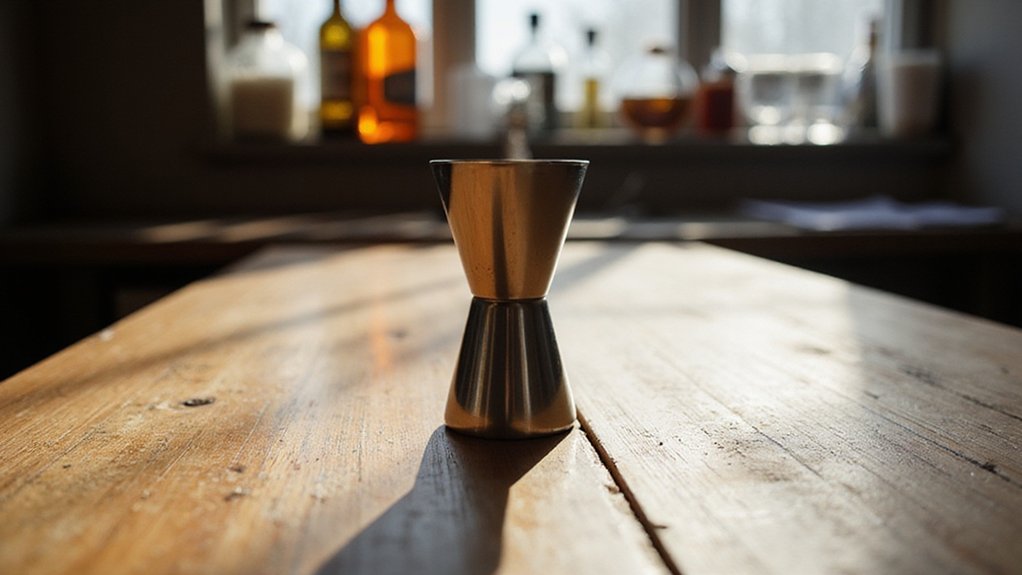
A jigger holds exactly 1.5 fluid ounces. This measurement is the standard in professional bartending and provides a reliable baseline for pouring. Using a jigger ensures your cocktails are consistent and accurately measured, avoiding overpouring or guesswork. The 1.5 oz side on your double-sided jigger is specifically calibrated for this purpose. When a recipe calls for a jigger, pouring 1.5 ounces guarantees your drink is balanced and up to standard. This simple, precise measurement helps you serve high-quality cocktails every time. For those who value both precision and presentation, pairing your jigger with a glass carafe ensures your batch ingredients are equally well-measured and stylishly served. For serving mixed drinks in large batches, selecting the best pitcher for sangria can complement your accurate pours. If you’re making cold cocktails, consider a nugget ice maker to ensure your drinks stay perfectly chilled without diluting their balance.
How Many mL Is a Jigger? (About 44)
A standard jigger typically holds about 44 milliliters. This measurement is based on 1.5 U.S. fluid ounces, which equals approximately 44.36 mL. Many bartenders round this to 44 mL for simplicity and ease of measurement. Some jiggers display a mark for 45 mL, providing an even simpler, rounded figure that’s still close to the precise measurement. Using about 44 mL as your reference balances accuracy and practicality, especially when measuring drinks quickly. For maintaining clean equipment, you can apply the same care to cocktail tools as you would to a Keurig descaling solution to ensure long-term consistency and performance. To keep your jigger clean and accurate, consider using a drink coaster to protect your workspace from spills. A high-volume juice dispenser might help you scale your cocktail recipes for parties. Always check your jigger’s markings to ensure consistency, whether you’re aiming for the precise 44.36 mL or the rounded figure. This little detail helps keep your pours consistent and your cocktail recipes reliable.
What Are the Most Common Jigger Sizes?
The most common jigger sizes are the 1 oz / 2 oz double jigger, the 0.75 oz / 1.5 oz pairing, and the smaller 0.5 oz / 1 oz option. These sizes are popular because they align well with standard cocktail recipes. The 1.5 oz side is typically used for spirits, while the smaller side handles modifiers like bitters or syrups. Paying attention to jigger calibration is essential, as even slight differences can affect the balance of your cocktail. You might also consider using alternative measuring tools such as graduated jiggers or Japanese-style measures that feature multiple markings—like 0.25 oz, 0.5 oz, 1 oz, and 1.25 oz—to ensure precise pours without guesswork. The same principle of freezing basil ice cube trays requires careful calibration of water levels to avoid overflow and ensure consistent cube size. For a durable and reliable option, many bartenders prefer a stainless steel jigger with etched markings.
Why Your Jigger Size May Vary (Regional Differences)
U.S. fluid ounces and Imperial ounces are different measures. A 1.5 oz pour equals roughly 44.36 ml, which is often rounded to 45 ml in metric bars. Using the wrong measurement standard for your region can lead to inconsistent pours and slower speed behind the bar. Ensuring your jigger matches regional norms helps maintain accuracy, repeatability, and efficiency during service. Similarly, choosing the right equipment requires a buyer’s guide that compares quality, performance, and value for consistent results.
How to Measure Without a Jigger (Easy Swaps)
If you don’t have a jigger, you can still measure accurately using common kitchen tools. For precise pours, a tablespoon equals ½ ounce, so two tablespoons give you a perfect 1-ounce shot. To get a 1.5-ounce pour, use three tablespoons. Want a 2-ounce pour? That’s four tablespoons. For smaller amounts, 1.5 teaspoons equals about ¼ ounce.
You can get creative with measurement techniques using items around your kitchen. A standard shot glass can serve as a reference for balance, while a 1-cup measuring cup with ounce markings is great for larger volumes. Estimating by time is another option—count seconds: about ½ ounce per second, so three seconds will hit approximately 1.5 ounces. Remember, these methods keep your ratios steady, even without precise tools. Some types of top cold brew coffee filters are designed for durability and consistent extraction, making them a reliable choice for home brewing. For those who prefer a reusable cup, some find that Tervis tumblers with lids offer convenient volume markings for quick reference. Portable pink coolers with wheels offer similar convenience for keeping beverages chilled and organized during travel or outdoor events.
What Happens If You Skip the Jigger?
Skipping the jigger leads to ingredient waste because overpouring increases your costs and makes your inventory data inaccurate. When you don’t use the proper measurement tool, you risk pouring more than the standard amount, which can quickly add up over multiple drinks and shifts. This not only affects your profit margins but also makes tracking stock levels unreliable. For example, understanding the standard jigger size in ounces helps you avoid confusion with other common containers like a red solo cup, which holds a much larger volume. Similarly, a precise pour is just as critical when making frozen drinks, as the correct ingredient ratios for slushies ensure a balanced flavor and texture. Furthermore, guests can notice the inconsistency. Uneven strength between drinks suggests poor control and lowers your bar’s professionalism. Guests expect uniform quality every time, and skipping the jigger compromises that trust. Remember, a few seconds saved in pouring can undercut your overall quality and reputation, making proper measurement tools a smart investment. Choosing between a jigger and alternative heating methods may seem unrelated, but the principle of controlling energy output for consistency applies directly to your pour technique, just as it does to how an electric kettle versus a stove manages heat transfer for reliable results.