
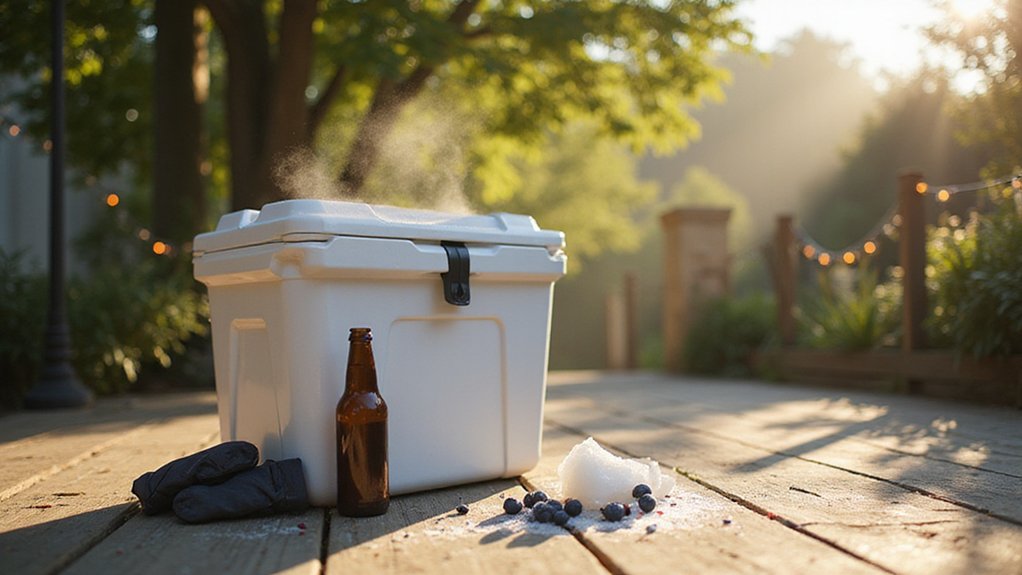
Wondering how long dry ice will keep things cold in your cooler? Usually, you can expect 12 to 24 hours of cooling in a standard cooler.
But high-quality, well-insulated coolers can stretch that to 24 to 48 hours. Several factors like insulation, ambient temperature, and how often you open the lid can influence these times.
Keep reading to learn how to get the most out of your dry ice.
How Long Does Dry Ice Last in a Cooler?
Dry ice typically lasts between 12 to 24 hours in a standard cooler. However, using a high-quality, well-insulated cooler can extend this period to 24 to 48 hours. If you add heavier amounts, like 20 pounds, you might see it last beyond two days. To maximize dry ice lifespan, wrap it in newspaper, use a solid block instead of pellets, or store it in a way that minimizes sublimation. For truly optimal results, consider pairing your dry ice with an ice maker that produces nugget ice for consistent, cold storage. Limiting how often you open the cooler and pre-chilling it also helps preserve the dry ice longer. Smaller or less insulated coolers generally see dry ice lasting closer to 12 to 18 hours, while premium coolers can stretch to two days or more. The key factors influencing longevity are cooler quality and your storage and handling techniques. For a truly perfect fit in your vehicle, consider using car cup holder coasters to protect your interior from condensation. Additionally, recognizing that commercial ice machine cleaning schedules can influence overall ice quality, maintaining your equipment helps ensure your cooler stays at optimal temperatures.
The #1 Thing That Determines Dry Ice Lifespan
Your cooler’s insulation quality is the single biggest factor that determines how long dry ice lasts. The type of cooler material and the thickness of its insulation directly influence how much outside heat seeps in. Thicker, high-quality insulation, like foam or gel-based layers, can slow heat transfer significantly, allowing your dry ice to last 2 to 4 days. On the other hand, basic Styrofoam or thin plastic coolers let heat flood in quickly, reducing dry ice lifespan to just 12 to 24 hours. With a premium insulated cooler, you might lose only about 5 to 10 percent of your dry ice each day, whereas a standard cooler can vaporize 30 to 50 percent daily. Don’t overlook the importance of insulation—it’s the most effective way to extend your dry ice storage time. The build quality and materials of your cooler make all the difference. A high-performance cocktail shaker, designed for shaken espresso, often relies on similar insulation principles to keep ingredients cold during vigorous shaking. For comparison, the ice maker design used by major fast-food chains prioritizes consistent shape and density to maximize cooling efficiency in their insulated storage bins. Selecting a cooler with top carafe with glass construction ensures superior thermal retention and long-term value.
Does the Amount of Dry Ice You Use Change the Timing?
The amount of dry ice you use definitely changes how long it lasts in your cooler. More dry ice means a longer duration before it fully sublimates. For example, a 10‑pound load typically lasts 24 to 36 hours in a standard cooler, while a 5‑pound load might only last 18 to 24 hours. If you need your items to stay cold for two days, using between 10 and 20 pounds is a practical range in higher-quality coolers. For reference, a standard cocktail jigger holds 44 milliliters of liquid, which is a useful comparison when measuring small quantities of dry ice for precise cooling applications. Additionally, choosing the right top drain plugs for your cooler can help maintain a tight seal and prevent cold air from escaping, further optimizing dry ice efficiency. You can also create stylish drink coasters from simple materials to protect your table surfaces when setting down cold beverage containers.
However, the cooler’s insulation quality plays an equally important role. A well-insulated cooler can stretch that dry ice farther, making the most of the added mass. On the other hand, a poorly insulated cooler will waste your ice faster, no matter how much you put in. External factors like ambient temperature also matter but focus on the quantity and insulation first. Generally, 5 to 10 pounds of dry ice is enough for a day, while 20 pounds or more can handle multiple days in premium coolers. Without proper insulation, even a large block won’t last as long as expected. So, while more dry ice does extend your cooling time, the cooler’s quality ultimately determines how much ice you should use.
Does Hot Weather Melt Dry Ice Faster?
Hot weather significantly speeds up the sublimation of dry ice. When ambient temperatures rise, more heat transfers into the dry ice, causing it to turn directly into gas faster. At 100°F, dry ice can sublimate several times quicker than at 70°F. In practical terms, you might see dry ice fog last less than 12 hours in poorly insulated containers during hot weather. Even a standard cooler in over-80°F conditions typically lasts under 24 hours. The quality of your cooler also influences how long the dry ice lasts; high-quality rotomolded coolers can extend that to 48 hours, while basic foam coolers may be exhausted within the same day. Understanding the exact numbers for dry ice sublimation rates in various container types helps you plan more accurately. Essentially, hot weather does not melt dry ice but pushes sublimation into overdrive, drastically shortening its lifespan. For best results, a high-end rotomolded cooler with excellent insulation can dramatically slow sublimation and outperform basic models. For example, the typical freezing time for a slushie machine is largely irrelevant when considering dry ice storage, as the two processes are entirely different.
Why Opening the Lid Shortens Dry Ice Life
Every time you lift the lid, warm air rushes in and the cold CO₂ layer escapes. This causes the dry ice to sublimate faster to re‑chill the space. Opening the lid increases the thermal exchange inside your cooler, which shortens its dry ice life. A quick 10-second peek can waste about 1–2% of your remaining dry ice. Open it ten times a day, and that adds up to roughly a full day of lost ice compared to opening it just twice.
Lid integrity is crucial for extending dry ice duration. A tight seal keeps the insulating CO₂ blanket in place, slowing sublimation. Without a proper seal, repeated opening causes temperature swings that force your dry ice to work harder. Each time you open the lid, cold air exchanges for warm air, speeding up the process. Keeping the lid closed preserves the cold environment and makes your dry ice last longer. This principle of maintaining a tight seal is similar to cleaning your Iceman slushie machine regularly to prevent residue buildup from ruining its performance.
Block vs. Pellets: Which Form of Dry Ice Lasts Longer?
A solid block of dry ice lasts longer than pellets due to its lower surface-area-to-volume ratio. A typical 5-pound block can provide 18 to 24 hours of cooling in a quality cooler. In contrast, pellets, with their many exposed edges, sublimates faster and usually lasts about half as long. This makes blocks ideal for extended storage, long trips, or shipping, where maintaining cold temperatures over time is crucial. Pellets, on the other hand, are better suited for quick chilling applications but require more frequent replacements. When comparing the same weight, blocks consistently outperform pellets in longevity, making them the preferred choice when maximum holding time is necessary.
How Pre-Cooling Adds Hours to Dry Ice Life
Pre-cooling your cooler for 12 to 24 hours can significantly extend dry ice lifespan by reducing the initial heat load. When your cooler starts out warm, it immediately draws energy from the dry ice, causing it to sublimate faster. Chilling the interior first ensures the cooler retains its cold temperature longer, meaning the dry ice spends more time cooling your contents rather than warming the cooler itself. Industry guidance indicates that the first few hours after loading are the most critical for sublimation, so pre-cooling during this period can yield substantial benefits.
To maximize this effect, fill the cooler with ice packs or frozen bottles, keep the lid shut, and place it in a cool location. Starting with a cold core enhances insulation effectiveness and limits heat transfer. Thicker insulation and minimizing lid opens further improve results. As a simple yet powerful strategy, pre-cooling can add up to 22 extra hours of dry ice life in premium rotomolded coolers.
Can Regular Ice Help Dry Ice Last Longer?
Adding regular ice to your cooler will not help dry ice last longer. Dry ice sublimates at -109.3°F, while regular ice stays at 32°F, and these temperatures don’t work together to preserve the dry ice. Regular ice can form a solid layer around dry ice, but this doesn’t slow its sublimation. Instead, it creates dangerously cold zones that can pose risk if touched. For example, placing red solo cups in a dishwasher requires careful temperature management to avoid warping, just as mixing dry ice and regular ice creates unsafe conditions. Using a precise jigger helps ensure accurate measurements when mixing drinks that require careful temperature control. Handling dry ice requires insulated gloves to prevent severe cold burns. Use regular ice for chilling drinks and dry ice for freezing or preserving food, but mixing them in an attempt to prolong dry ice’s life is ineffective. The rate at which your dry ice sublimates depends on insulation quality and the size of the block, not on the presence of regular ice. For maintaining appliance efficiency, consult guides on cleaning your commercial ice machine to ensure optimal insulation and performance.
Dry Ice Timelines for Camping, Road Trips, and Overnight Storage
For overnight camping, a 5-pound block of dry ice typically lasts 18 to 24 hours in a standard cooler. This duration is enough to keep your perishable items cold and fresh through a single night. To maximize its longevity, pack the dry ice as a solid block rather than crushed or loose pieces, and wrap it in newspaper to slow sublimation. Keeping the cooler lid closed as much as possible also helps extend its cold retention. For longer trips, adding 10 pounds of dry ice can cover a full day, and using 15 pounds in a well-insulated cooler can keep items cold for up to a week. Proper packaging and insulation are crucial; layering dry ice under frozen goods and minimizing openings can significantly improve how long your dry ice lasts during your adventure. For a more durable option that handles dry ice effectively, consider a Coleman cooler with wheels for easy transport and reliable insulation. Interestingly, the development of disposable insulated containers traces back to the paper cup invention, which revolutionized portable cold storage. If you need to serve frozen shots using dry ice, jello shot cups are the best alternative for portioning and durability.
4 Signs Your Dry Ice Is Almost Gone
When your dry ice shows these signs, it’s a clear indication that it is almost gone. First, the fog that typically emanates from the cooler will stop or diminish significantly. The cooler will also feel noticeably lighter, which means a substantial amount of sublimation has already occurred. Open the cooler and observe for small fragments or snow-like pieces at the bottom; these will disappear faster than solid blocks because they sublimate more quickly. Lastly, you may hear rattling or shifting sounds inside, signaling that the dry ice has broken apart into smaller pieces or fragments. Recognizing these signs helps you know when to replace your dry ice to keep things cold. To extend the life of remaining dry ice, keep the cooler lid closed as much as possible to slow down sublimation. Always handle dry ice with care; remember that carbon dioxide gas can still escape from small fragments, so avoid sealing the cooler airtight. Never inhale vapor directly, as it can be dangerous. Monitoring these signals ensures safe and effective dry ice use. Even with careful management, the best insulation practices for your cooler, similar to those highlighted in top consumer comparisons, can significantly affect how long any cooling agent lasts.


