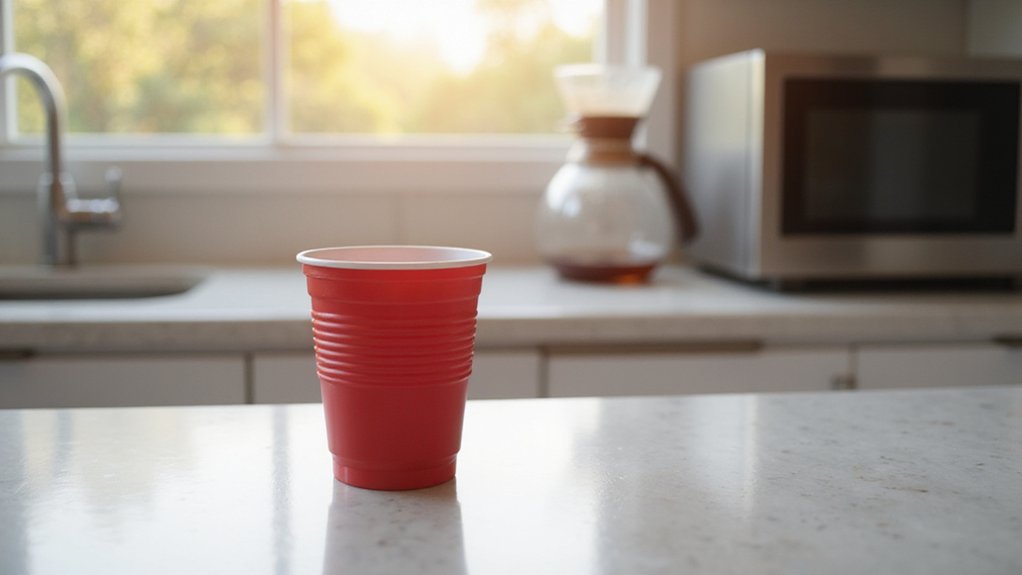
Wondering if you can safely microwave a red Solo cup? The quick answer is no. These cups are made from polystyrene plastic, which isn’t built to handle heat and can melt, warp, or even release harmful chemicals into your beverage.
Stay with me, and I’ll explain why microwaving them isn’t safe and what better alternatives you can use.
Can You Microwave Red Solo Cups?
No, you shouldn’t microwave a red Solo cup. Solo’s own guidance clearly states that these cups are not meant for microwave use. They are made from plastics that aren’t designed to withstand heat, which means they can melt, warp, or weaken during microwave heating. A softened or deformed cup can spill hot liquid unexpectedly, risking burns or injuries. Additionally, melting plastic in your microwave can leave harmful residue behind, which is unsafe to consume and difficult to clean out.
From an environmental perspective, damaging a non-recyclable Solo cup by microwaving it also contributes to unnecessary waste. Instead, transfer your drink to a microwave-safe glass or ceramic container. If the cup does not have a microwave-safe label, do not attempt to heat it. Always stop heating immediately if you notice the cup softening, warping, or deforming to prevent accidents. Just as you would maintain a cleaning routine for commercial equipment, ignoring heat limits on plastics leads to breakdowns and safety hazards.
What Are Red Solo Cups Made Of?
Red Solo cups are made from #6 plastic, specifically polystyrene. This rigid thermoplastic polymer is inexpensive and easy to mold into the familiar stackable disposable cups. Its durability allows the cups to hold their shape well, making them resistant to spills when used for cold beverages. For those who prefer a reusable option, consider instead a durable appliance like an ice maker with nugget ice for consistent cold drinks. Unlike a reusable cooler that requires proper insulation setup to maintain temperature, a Red Solo cup offers no thermal retention.
Despite their convenience, these cups are designed for single use. They carry the #6 recycling code, which indicates they are recyclable as polystyrene. However, recycling facilities vary—many do not accept #6 plastics, so it’s important to check if your local center handles polystyrene. Similar to how sealing wood coasters protects the surface, these cups rely on their molded structure for stability.
Since the cups are built for quick production and low cost, they are not suitable for repeated heating. The molded polystyrene is stable at room temperature but can warp or melt if exposed to heat. Handle them carefully to avoid deformation, especially if you plan to pour hot liquids into them.
How Heat Affects Red Solo Cups in the Microwave
Microwaving a Red Solo cup causes the polystyrene plastic to start softening around 170°F. The thin walls of the cup often reach this temperature before the liquid inside feels hot to touch. Because polystyrene resists heat poorly and conducts it unevenly, microwave energy creates hot spots inside the cup. This leads to uneven heating, causing the rim or base to buckle or sag as the plastic weakens. Continued heating pushes the plastic toward melting, resulting in deformed, leak-prone walls. The structural integrity quickly collapses, leaving you with a distorted, unstable container. Even short bursts of microwave time can cause permanent warping, making the cup prone to spilling as it loses strength well before fully melting. Unlike thermal carafes designed to maintain heat safely, polystyrene lacks the material properties for any sort of heat retention without degrading.
Health Risks of Microwaving Red Solo Cups
Microwaving a Red Solo cup can lead to chemical leaching of BPA and phthalates into your beverage. Heating intensifies the release of these endocrine-disrupting chemicals, even if the cup appears undamaged. These substances can migrate into your drink unnoticed, creating invisible contamination. Additionally, microplastic particles can be released during microwave heating. One study found that up to 534,000 microplastic particles might be shed after just five minutes of microwave exposure. Repeated heating increases the risk of accumulating these chemicals and particles in your food or drink, which can pose serious health concerns over time. Similarly, paper cups can shed plastic lining particles when exposed to hot liquids, adding another source of contamination. It’s safer to transfer your beverage to glass or ceramic containers designed for heat, reducing your exposure to these potential toxins.
Physical Dangers of Microwaving Red Solo Cups
Microwaving a Red Solo cup presents significant physical safety hazards that are visible and tangible. When heated, the polystyrene plastic quickly softens and warps, often before you even realize it. This weakened structure can cause the rim or sidewall to buckle under the weight of the liquid inside, leading to sudden collapse. Such deformation increases the risk of hot contents splashing when you handle the cup, potentially causing burns. Additionally, softened seams or a warped base can leak, increasing the chances of spills, especially near the top. Cleanup becomes difficult because melted plastic sticks to the microwave interior, leaving residue that can damage surfaces. These damages not only pose immediate safety risks but also contribute to environmental harm, as damaged cups are less likely to be recyclable and more likely to become waste. Recognizing these physical dangers helps you avoid accidents and messes that are entirely preventable.
Safer Alternatives to Microwaving Red Solo Cups
Microwaving Red Solo cups is unsafe because they are not designed for heat. Instead, choose glass or ceramic alternatives. Microwave-safe glass cups and bowls distribute heat evenly and are made to withstand the microwave environment. Properly glazed ceramic containers are durable for repeated reheating and won’t release harmful chemicals. To minimize environmental impact, opt for heat-resistant drinkware or containers labeled as microwave-safe with FDA-style markings. You can also repurpose old glass mugs or bowls as microwave-friendly vessels, reducing waste and giving new life to items you already own. Always check for metal trim, chips, or cracks before heating anything to avoid accidents. Transfer leftovers into these safer containers instead of disposable cups. Consider using a backpack with a cooler to carry your microwave-safe containers and beverages on adventures, keeping them organized and chilled. Making this simple switch helps protect your health and reduces single-use plastic waste, benefiting both you and the planet.
How to Spot Microwave-Safe Plastic Cups
Look for the microwave-safe symbol, typically represented by wavy lines or a small microwave icon. If you see the words “microwave-safe” printed on the cup, that’s an even clearer sign. Avoid cups labeled with recycling codes #1 PET, #6 polystyrene, or those with faded or missing symbols, as they may not withstand microwave heat. Additionally, check the feel of the plastic—thicker, sturdier cups tend to warp less when heated. For households that frequently enjoy frozen treats, investing in a home Icee machine can provide a safer and more durable alternative than repurposing disposable plastics. When you’re uncertain and no symbol is visible, it’s safest to assume the plastic isn’t microwave-safe, since guarantees are only valid with proper labeling.
Best Practices for Reheating Drinks Without Red Solo Cups
To reheat a drink safely, always transfer it from a Red Solo Cup into a microwave-safe container before warming. Use a glass mug or glazed ceramic bowl because these materials handle heat well and won’t release harmful chemicals. Avoid stainless steel travel mugs; pour the beverage into a heat-resistant vessel instead, as metal can cause sparks or uneven heating in the microwave.
Choose a container with a handle and enough space at the top to prevent spills during heating. Reheat in 30 to 60 second bursts on medium power, stirring in between to ensure even warmth. Stop heating once the drink reaches the desired temperature—avoid boiling, which can alter the flavor or cause spills.
Check that the vessel stays cool to the touch while the drink warms. If it heats up quickly or becomes hot to hold, you’re using the wrong material. For specialty recipes like spiced cider or herbal teas, a ceramic mug with a handle works perfectly. Even for decorative or presentation purposes, never reheat in a plastic container or directly in a Solo cup. After warming, transfer the drink back into an insulated mug if you want to keep it warm longer, but never reheat in the original Solo cup.