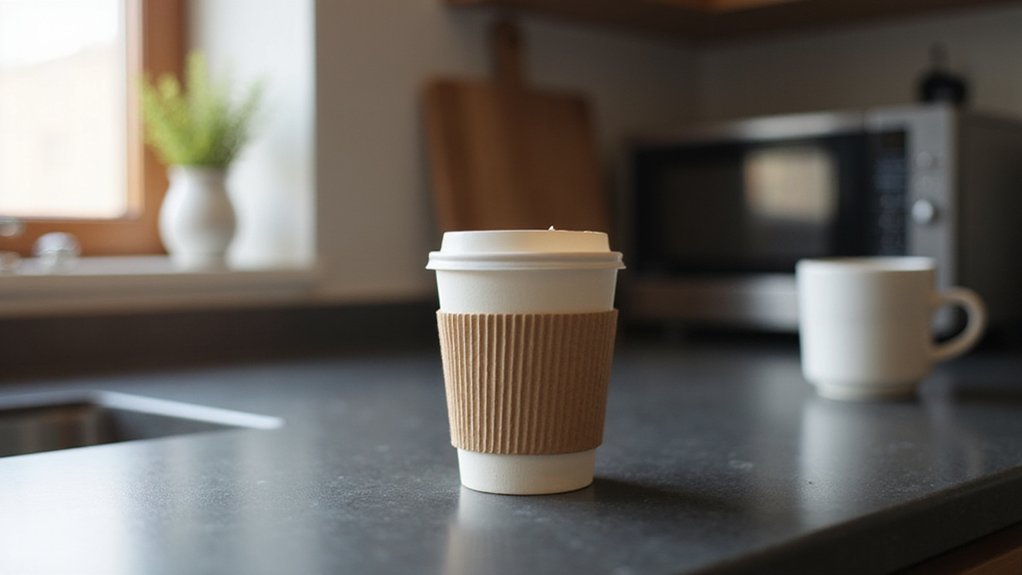
Wondering if you can microwave a paper cup? The short answer is: only if it’s labeled “microwave safe,” but even then, caution is essential.
Many paper cups, especially those from coffee shops, aren’t designed for microwave use and could weaken, leak, or potentially cause a fire.
Stay tuned to learn safer ways to reheat your drinks and the hidden risks to watch out for.
Can You Microwave a Paper Cup? Usually No
Unless the packaging explicitly states “microwave-safe,” you should avoid putting a standard paper cup in the microwave. Most paper cups are designed only for brief contact with hot liquid, not for sustained microwave exposure. Many of these cups have a plastic or wax lining that isn’t intended for reheating. Even cups labeled for hot drinks often lack the structural integrity to withstand microwave heat without warping or leaking. To stay safe, transfer your beverage to a microwave-safe glass or ceramic container instead. Regular cleaning of your paper cup does not make it safe for microwave use, just as commercial ice machines require routine maintenance to function properly. For those seeking consistently chilled drinks, a dedicated appliance like a nugget ice maker offers a reliable alternative to relying on paper cups. Reusable mugs made for microwave use are better options, reducing the risk of accidents. Always check for a microwave-safe label before heating anything in a paper cup. If you’re unsure, it’s safer to skip the paper cup altogether. Even with thorough cleaning, plastic surfaces can retain stains that weaken over time, so using baking soda for scrubbing is an effective method to restore clarity.
What Happens to a Paper Cup in the Microwave: Warping, Leaking, and Fire Risk
A paper cup can warp, leak, or catch fire when heated in the microwave. The adhesive holding the cup together begins to fail under high heat, causing the cup to lose its shape and potentially leak hot liquid. This spills, increasing the risk of burns or electrical shorts if the liquid reaches the microwave’s electrical components. Fire risk is significant because paper is combustible; empty cups or those with minimal liquid are especially vulnerable. Microwave hot spots can create localized scorching, which may ignite the paper and cause smoke or flames to develop. Even brief heating sessions can weaken the cup’s structure, making it unsafe to use. For instance, the twisted bar spoon design of a cocktail tool is engineered for durability, unlike the disposable construction of a paper cup. Unlike cold brew concentrate, which is designed for stable storage, a microwaved paper cup cannot reliably contain hot liquid without degrading. For example, the sealed paper construction used in such cups is far less durable than the heavy-duty plastic or stainless steel components found in a slushie machine. To avoid these hazards, always opt for microwave-safe containers designed to withstand heat.
The Hidden Risks of Microwaving Paper Cups: Chemical Leaching and Structural Failure
Structural failure is a real risk when microwaving paper cups. Once the outer barrier breaks down, the paper absorbs moisture from the hot liquid, weakening the entire structure. The glued seams can soften under heat, causing the cup to split or collapse unexpectedly. This can lead to hot liquid spilling and increasing the chance of burns. Even if the leaching of chemicals isn’t a concern for you, the compromised integrity of the cup poses a genuine safety hazard. Don’t assume a paper cup is safe just because it appears intact—microwave heat accelerates these hidden breakdowns, making structural failure a real threat. For comparison, a standard 16-ounce Solo cup can hold hot liquids, but its thin paper construction is not designed for microwave use. A tumbler with handle made from stainless steel or ceramic would offer a safer and more durable alternative for reheating beverages. Cleaning your portable ice maker regularly with mild soap and water can prevent buildup that would otherwise compromise its performance.
Are Coffee Shop and Vending-Machine Cups Microwave-Safe?
Most coffee shop and vending-machine cups are not microwave-safe. Even if they hold hot beverages well, that doesn’t mean you should reheat them in the microwave. These cups often contain plastic or polyethylene linings that can soften, deform, or melt under microwave heat, leading to leaks or structure failure. Additionally, eco-friendly labeled cups are not automatically safe for microwaving, as many haven’t been tested for that purpose. For example, Starbucks paper cups use a polyethylene lining that can break down in the microwave, potentially leaching chemicals or causing the cup to leak. Similar to how a round ice cube tray requires proper setup to avoid cracking, a paper cup’s lining is not designed for the intense, uneven heat of a microwave.
Your best option is to avoid microwaving these cups unless they clearly state “microwave-safe” on the label. Without that assurance, the lining and glue in the cup can fail, creating potential messes or safety hazards. Instead, pour your drink into a ceramic mug or another container specifically designed for microwave use. Reusable travel mugs are also a good alternative—they’re safer, more durable, and better for the environment. Never trust a cup to be microwave-safe just because it previously held hot liquid.
How to Spot a Microwave-Safe Label on a Paper Cup
To identify a microwave-safe paper cup, look for a clear label or symbol indicating safety. The most reliable markers are phrases like “Microwave Safe” or “Microwave Friendly” printed directly on the cup or its packaging. Be cautious of wording such as “Heat Resistant,” unless the manufacturer specifies it as microwave-safe. The universal symbol features three wavy lines stacked in a square, signaling the product has been tested and approved for microwave use. Check various parts of the cup, including the bottom, sides, rim, or any sleeves and lids, as the symbol might be located there. For instance, Natural Value Microwave Safe Paper Cups are manufactured using a dioxin-free bleaching process to ensure safety and minimal environmental impact. Similarly, many top-rated thermal carafe brewers, such as the Bonavita BV1900TS, prioritize safe materials and performance for a worry-free brewing experience.
Always verify the marking against the manufacturer’s specification sheet; decorative prints, recycling icons, or removable tags do not serve as safety indications because they are not permanent or specific enough. If the symbol is faded, unclear, or missing, treat the cup as unverified and avoid microwaving it. It’s important not to confuse “Hot Drink Only” notes with microwave safety; the former just indicates the cup can handle hot liquids, not that it’s microwave compatible. When in doubt, skip microwaving the cup altogether to prevent safety hazards.
What About Paper Cups Labeled “Hot Drink Only”?
Labeling a paper cup as “Hot Drink Only” does not mean it is microwave-safe. That phrase indicates the cup’s ability to hold hot liquids without deforming or leaking, not its safety in a microwave. The cup’s lining, glue, and seams may not withstand microwave radiation, increasing the risk of melting, leaks, or chemical release. In fact, paper cups are lined with a plastic coating to prevent leakage, but this lining can shed microplastics into hot liquids when heated. Manufacturer warnings should always be followed—“hot drink only” labels do not imply microwave compatibility. To be safe, transfer your beverage to a microwave-safe container such as glass or ceramic before heating. Only microwave the drink if the cup has a clear “microwave-safe” label. For example, knowing the exact ounce capacity of a coffee carafe helps ensure you transfer the right amount to a microwave-safe container.
What Does the Plastic Lining Have to Do With Microwaving?
What does the Plastic Lining Have to Do With Microwaving?
The plastic lining is the main reason you shouldn’t microwave paper cups. Most of these cups use a polyethylene (PE) lining that softens at around 80°C, which is well below the high temperatures generated in a microwave. When heated, the lining can warp or break apart, increasing the chance of plastic contaminating your drink. High heat can also cause harmful chemicals to migrate from the plastic into your beverage, especially if the drink is oily or contains fats. Even if the cup appears intact, the lining can degrade without visible signs, releasing microplastics or chemicals into your drink. Because the lining, not the paper, determines the cup’s microwave safety, you should avoid microwaving unmarked cups with plastic linings. For a truly safe alternative, consider using a perfect wine cooler method to chill your beverage without any heat risk at all. Microwave-safe food containers, such as the best models of ice buckets with lids, use materials designed to withstand high heat without degrading. For instance, top styrofoam cups with lids are generally not recommended for microwave use either due to similar heat-related risks.
Can You Microwave a Paper Cup for Just a Few Seconds?
Even a few seconds in the microwave isn’t safe for a standard paper cup. The cup’s structural integrity can weaken almost immediately, even without visible melting. Coatings designed for cold or room-temperature use may start to degrade, creating potential contamination risks. Additionally, the liquid inside can heat much faster than the cup itself, which can lead to spills and burns when you remove it. Similar to Red Solo Cups, paper cups often have a thin plastic or wax lining that can leach into your drink when heated.
A brief microwave burst doesn’t make an unlabeled paper cup safe for microwave use. Most paper cups are not engineered to withstand microwave exposure, regardless of how short the heating duration is. To stay safe, transfer your drink to a ceramic or glass mug before microwaving. If you must use a paper cup, look for one specifically labeled as microwave-safe, but do not assume that a short microwave interval will prevent damage. The material limitations still apply, and risks remain—even with just a quick heat.
A Better Way to Reheat Your Drink (Without the Paper Cup)
Pour your drink into a microwave-safe mug and reheat in short bursts to avoid overheating or damaging the container. Use 20 to 30 second intervals, stirring between each to distribute heat evenly and prevent hot spots. This gentle approach helps preserve the drink’s flavor and prevents burns on your hand. Leave some headspace—about one inch—for steam and bubbling, and never fill the mug to the rim to avoid spills. Stick to ceramic or glass mugs that are labeled microwave-safe, and avoid any with metallic accents. Warm your beverage until it’s comfortably sippable, steering clear of boiling. This method consistently delivers better results than reheating in a paper cup.
The One Rule to Never Break With Paper Cups and Microwaves
If there’s no microwave-safe label on your paper cup, do not put it in the microwave. The safety of the cup depends entirely on its material. Most disposable paper cups have a plastic or wax lining that isn’t meant to withstand microwave heat. When microwaved, this coating can break down, releasing chemicals into your drink and weakening the cup’s structure. This increases the risk of spills, burns, or even a fire if the cup dries out or overheats. Even uncoated paper can tear or burn easily. Never assume—it’s safer to assume the cup isn’t microwave-safe if the label isn’t there. Microwave-safe cups are rare and should be specified clearly. Always follow this rule to avoid accidents.