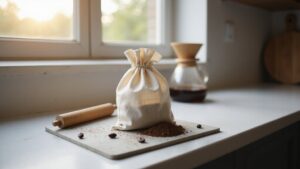
If you’re wondering how to get the perfect grind for your coffee, you’re in the right place. Choosing the right grind size and using your grinder correctly can make a big difference in the flavor and strength of your brew.
By the end, you’ll know how to grind your beans with confidence and keep your machine in top shape. The full details are just below.
Match Your Grinder Type to Your Brewing Method and Budget
Matching your grinder to your brew method and budget is crucial because it directly influences flavor. For pour-over or drip, a burr grinder like the Baratza Encore or OXO Brew is ideal. They produce consistent medium grinds that help preserve bean freshness and ensure even extraction. If you prefer espresso, you need fine control over your grind size; options like the 1Zpresso JX-Pro or Baratza Encore ESP offer precision without costing a fortune. Manual burr grinders such as the Timemore C2 are great for durability and quiet operation, especially when traveling. Flat burr grinders like the Fellow Ode Gen 2 can enhance clarity for premium filter brews. Avoid blade grinders altogether—they are inexpensive but produce uneven particles that compromise consistency. Your budget and brewing style should guide your choice, and investing in a durable burr grinder will pay off in the long run. For tea lovers, an electric kettle with variable temperature control ensures precise water heating for different tea types. For those who enjoy icy beverages, a nugget ice maker offers consistent texture for perfect chill. For example, blade grinders consistently fail to provide the uniform particle size needed for reliable extraction.
Measure Beans Before Grinding for Perfect Ratios
Measuring beans by weight rather than volume ensures a consistent dose that directly affects your coffee’s strength and flavor. Using a kitchen scale allows you to repeat your measurements accurately, unlike scoops, which can vary significantly due to bean size and roast level. This precision helps you achieve recipe consistency every time you brew. A standard ratio like 1:16 coffee to water is a good starting point—meaning for 300 grams of water, you need about 18.75 grams of beans. Weigh whole beans before grinding, a method known as single dosing, to only grind the amount you need. This reduces waste and minimizes stale exposure. Remember to account for grinder retention; weigh the grounds after grinding if your machine tends to hold back some. For optimal pairing, you can even pair your brewing setup with a countertop ice maker to chill your coffee beverages perfectly. Keeping your water source clean is just as important, which is why regularly checking the ice maker water filter ensures your brew’s flavor isn’t compromised by impurities. Additionally, for outdoor brewing sessions, a cooler with wheels makes it easy to transport chilled water and coffee supplies. By keeping both the coffee dose and water mass consistent, you prevent weak or over-extracted coffee, laying the foundation for precise, repeatable brewing.
Set Your Grind Size Based on How You Brew
Matching your grind size to your brew method is essential for proper extraction. Short contact times, such as for espresso, require a fine, powder-like grind to quickly increase surface area and ensure a rich flavor. Moka pots need a slightly coarser fine grind, resembling powdered sugar, to prevent over-extraction and clogging. Long steeping methods like cold brew benefit from an extra-coarse grind, similar to cracked peppercorns, to avoid bitterness and over-extraction. French press uses a coarse grind, about sea salt-sized, which supports slow extraction and helps prevent grounds from passing through the mesh filter.
For drip and pour-over brewing, medium grinds are ideal because they balance flow rate with contact time. Use a medium-fine grind for pour-over methods, akin to sand, and medium-coarse for devices like Chemex, which require a slightly coarser grind. If your coffee tastes weak, the grind is probably too coarse. Conversely, if it’s bitter and flows slowly, you’ve ground too fine. Adjust your grind size based on taste and your brewing device’s standards. Consistency in particle size is crucial to achieve repeatable, balanced extraction every time.
Grind With Proper Technique for Better Extraction
Only grind the amount of coffee you need for each brew to minimize aroma loss and prevent stale flavors from developing. Collect your grounds immediately after grinding so they aren’t exposed to air before brewing, which can degrade volatile compounds. Freshly grinding just before brewing helps preserve these delicate aromas and flavors better than pre-ground coffee. Weigh your beans beforehand to ensure consistency in each shot or pot, which leads to more reliable and repeatable results. Using steady, controlled input—whether in grind size, dose, or tamping—keeps extraction even and your cup tasting clean and balanced. For best results, pour your brewed coffee into a glass pitcher with spout for precise serving without drips. For troubleshooting equipment issues, consult Whirlpool ice maker repair guides to ensure your grinder’s motor and internal components are functioning properly. Selecting a carafe with glass that offers durable construction and a drip-free spout enhances your pouring accuracy and preserves the coffee’s temperature during service.
Check Coffee Grind Consistency and Fix Issues
To check grind consistency, spread a small sample of your grounds on a dark surface and inspect visually. Look for uneven particles: a mix of fine dust and larger chunks indicates poor uniformity. Such inconsistency can cause bitter or sour shots. Static buildup at the chute can cause clumping; fix this by lightly misting your beans with water before grinding. Burr misalignment is another common issue that leads to uneven particle sizes. To test for this, mark your burrs with a dry-erase marker, then close them lightly—uneven removal of the marker reveals high spots. Correct the alignment by adding thin shims between the burrs. After making adjustments, recheck your grind distribution, and track extraction time and flavor stability to confirm consistent results. Similarly, Keurig descaling solution requires proper setup and correct use to prevent inconsistent brewing and off-flavors. A narrow, centered particle size distribution indicates your grind is dialed in. If you lack a grinder, using a mortar and pestle offers an effective alternative for achieving a consistent grind. For those who prefer a ready-made alternative, wine cooler drinks provide a consistent flavor profile without the need for grinding.
Clean and Maintain Your Coffee Grinder Regularly
Regularly cleaning your coffee grinder is essential for maintaining its optimal performance. To keep your grind consistent, develop a cleaning schedule based on your usage: brush away visible grounds after each use, and perform a deep clean monthly for home use. If you frequently grind dark roast or oily beans, increase the cleaning frequency, especially when using cleaning tablets.
Use dedicated maintenance tools like a grinder brush, compressed air, and cleaning tablets to make the process easier. Always unplug the grinder before cleaning the internal components. Weekly, brush burr faces, the chute, and hopper to prevent oil buildup and ensure smooth feeding. Run cleaning tablets once a month, followed by a purge with a sacrificial coffee dose to clear residues.
Never use water on the burrs, as moisture causes corrosion and damages the grinder. Consistent upkeep prevents stale flavors from transferring, reduces clogging, and keeps your grinder functioning evenly over time. Regular cleaning not only preserves the quality of your coffee but also prolongs the lifespan of your equipment.
Dial in Grind Settings From Coarse to Fine
Matching your grind size to the contact time of your brewing method is essential for optimal extraction. Start with a baseline grind—coarse for methods like French press or cold brew, fine for espresso—and adjust in small increments, moving one notch finer or coarser each time. If your brew tastes sour, weak, or finishes too quickly, move to a finer grind to increase surface area and contact time. Conversely, if it tastes bitter, harsh, or drains too slowly, shift to a coarser grind to reduce extraction speed. Visual cues help guide your adjustments: coarse resembles sea salt, while a fine grind looks like powdered sugar. Keep the water amount and dose consistent when re-testing to accurately assess the impact of each grind change. For example, cold brew benefits from an extra-coarse grind to accommodate long steeping, while espresso demands a fine grind to achieve rapid extraction. Investing in a quality machine with a thermal carafe can help maintain consistent brew temperature as you test these adjustments. Dialing in your grind gradually allows you to precisely control surface area and extraction time, ensuring your brew develops balanced flavor. For quick reference, a standard 16-ounce Red Solo cup holds about two cups of volume, which helps when measuring beans or water for larger batches.
Common Coffee Grinding Mistakes to Avoid
Even if your grinder and brew method are perfectly matched, several common mistakes can still ruin your cup. First, avoid neglecting bean freshness. Grinding coffee too far in advance speeds up staling, so always grind immediately before brewing. Delaying this process results in flat, dull flavors. For those seeking a dedicated setup, choosing top undercounter ice makers ensures quality and performance for cold brewing applications.
Next, keep your grinder clean. An unclean grinder harbors old oils that turn rancid, contaminating your fresh beans and causing off-flavors. Regularly clean burrs and chambers to maintain optimal flavor clarity.
Also, pay attention to dosing accuracy. Under-dosing leads to weak, under-extracted coffee, while over-dosing wastes beans and throws off your brew ratio. Aim for the recommended amount, usually around 0.36 ounces (10 grams) per shot, depending on your brew method.
Finally, avoid grinding too quickly. Excessive speed generates heat that damages aromatic compounds, diminishing the coffee’s flavor and aroma. Grind at a steady pace to preserve the intricate oils and scents that make your coffee special. Keep beans fresh, your grinder clean, doses precise, and grinding speed controlled for a consistently excellent cup.