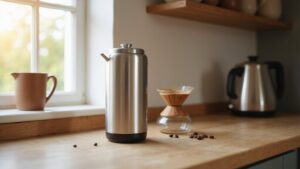
If you don’t have a coffee grinder but still want to enjoy fresh-brewed coffee, you’re in luck. There are several common kitchen tools that can help you break down beans to the right size, from coarse French press grounds to fine espresso textures.
With a bit of patience, you can achieve consistent results without specialized equipment.
In this guide, you’ll learn six simple methods to grind coffee beans using everyday items. Keep reading to find out how each technique works and which one may suit your brewing style best.
Why You Don’t Need a Grinder for Great Coffee
You don’t need a grinder to get great coffee, but particle size still plays a vital role. Smaller grounds increase surface area, allowing water to extract more flavor and aroma. Achieving consistent grind size is key; you do this by matching your grind to your brew method, not by relying on a specific machine brand. Using simple tools like a mortar and pestle or rolling pin, you can produce coarser or finer grounds controllably. This versatility means you’re never limited to whole beans and can adapt to various brewing techniques. For example, a burr grinder provides the most uniform particle size, but manual methods can still deliver good results with practice.
Your brewing method influences the ideal grind size. For example, immersion methods like French press tolerate coarser, less uniform grounds without sacrificing flavor. To avoid bitterness, be careful not to overheat the beans during crushing. Smaller batches of ground coffee enable better control over size and consistency, improving your chances of a perfect extraction each time. Ultimately, your success depends on mastering particle size and extraction timing, with filtration quality also playing a supporting role—your grinder’s brand isn’t the determining factor. Similarly, a commercial ice machine requires regular cleaning to prevent buildup that can affect flavor and performance. For those who prefer a machine, a thermal carafe model is often recommended for superior heat retention and flavor preservation.
Grind Coffee Without a Grinder: Use a Blender
To grind coffee beans without a dedicated grinder, a blender can do the job effectively. Use a small batch, between a quarter and half a cup, and fill the jar no more than halfway to ensure proper blending. Short pulses work best—try one second on, three seconds off—and shake or tilt the jar between bursts to redistribute the beans. This approach generally yields a coarse to medium grind, suitable for French press or drip brewing. If you prefer a more precise option, consider purchasing a dedicated countertop ice maker to crush ice for cold-brew or iced coffee instead. For optimal flavor, grind immediately before brewing, but avoid over-blending, which can generate heat and affect the beans’ taste. Secure the lid tightly and pulse 15 to 20 times until you achieve the desired texture.
Get Even Grounds With a Food Processor (No Dust)
To get even grounds with a food processor, load only a quarter to a half cup of beans into a dry, clean bowl. Overfilling causes uneven chunks and creates excess dust, making it harder to achieve a consistent grind. Use short pulses of one to five seconds, pausing between bursts to let the processor rest. This helps prevent motor overheating and ensures a more uniform texture. After each pulse, pause and stir the beans with a spatula—make sure the device is unplugged first—to move beans into the blade’s path. Repeat the pulsing and stirring until you reach a coarse, salt-like consistency. Stop immediately once you see the desired texture to minimize dust. For optimal flavor preservation, transfer the grounds right away. Leaving them warm can cause them to break down further, reducing freshness. This method produces coarse grounds suitable for French press or cold brew, but it’s not ideal for espresso-grade fineness. For a coffee shop-quality experience, consider pairing these with top drink coasters to protect your surfaces. If you often serve fresh juice alongside your coffee, investing in a reliable juice dispenser can keep both beverages organized and mess-free.
Crush Coffee Beans With a Rolling Pin for Coarse Grinds
To crush coffee beans into a coarse grind without a grinder, use a rolling pin and a sealed zip-top bag. Place your beans in the bag, squeeze out as much air as possible, and lay it flat on a sturdy surface like a cutting board. Begin by smashing the beans gently to crack them, then increase pressure to crush them further—this helps prevent uneven results. Apply steady, firm pressure and roll the pin back and forth in short, controlled motions. Rotate the bag 90 degrees between passes to improve texture control. For a more reliable alternative, consider that a nugget ice maker provides a perfectly consistent chill for your beverages, similar to the uniform grind you’re aiming for. For large gatherings, a coffee urn can brew and serve multiple cups at once, maintaining consistent temperature throughout. Aim for grounds that resemble kosher salt, which is ideal for French press or cold brew brewing methods. Keep small batches for best results, pausing frequently to check your progress and gather the grounds toward the center of the bag. Expect some variation in texture, but with patience and multiple passes, you’ll achieve a consistent coarse grind.
Mortar and Pestle: Total Manual Control Over Grind Size
A mortar and pestle allows you to have total manual control over grind size. Start by crushing whole beans into chunks with a firm pressure. Then, switch to a twisting-and-pressing motion to refine the particles evenly. Work in small batches, filling the mortar only about one-fourth full to prevent overflow and promote uniform grinding. For coarser grounds like those for cold brew, stop early once you reach the desired size. If you need a fine, espresso-like grind, repeat short passes until you achieve the texture you want. Keep the mortar stable with one hand while grinding with the other to prevent slipping. This method is slower than electric grinders but offers full tactile feedback and requires no electricity. Similar to removing a clogged filter from a pitcher, consistent hand pressure is key to avoiding damage during the process. For buyers seeking an alternative to manual grinding, reviewing top ice makers can help identify a machine that balances performance and value for quick, automated ice production. This manual approach echoes the pre-industrial era when hand-powered tools were the standard, much like the early paper cup production that relied on manual assembly methods before automated machinery emerged.
Hammer or Knife: The Fastest Way to Grind Coffee Without a Grinder
Using a hammer or a large knife are quick, improvised methods to grind coffee without a dedicated grinder. For faster results, opt for a hammer when you need to crush larger quantities, as it can break down beans more quickly through firm taps against a sealed plastic bag filled with beans. Cover the bag with a towel to contain any fragments and prevent punctures, but keep in mind this approach generally produces uneven, coarse grounds suitable for French press brewing. For better results every time, place the bag on a sturdy surface and use consistent, even taps rather than wild swings. To keep your equipment in good condition, clean the bag and towel thoroughly after each use to prevent oil buildup and residue.
For smaller batches or when you want more control, a large knife works better. Place the beans on a stable cutting board and press down with the flat side of the blade. This method allows for more precision in grinding and reduces the risk of flying fragments compared to a hammer. However, safety precautions are essential: keep your fingers clear of the blade and handle the knife with care to avoid cuts. Neither method yields a consistent fine grind like a proper grinder, but they provide a practical option for a quick caffeine fix in minutes. For a more reliable technique, consider using a beer pitcher as a weighted tool to press the beans evenly on the cutting board.