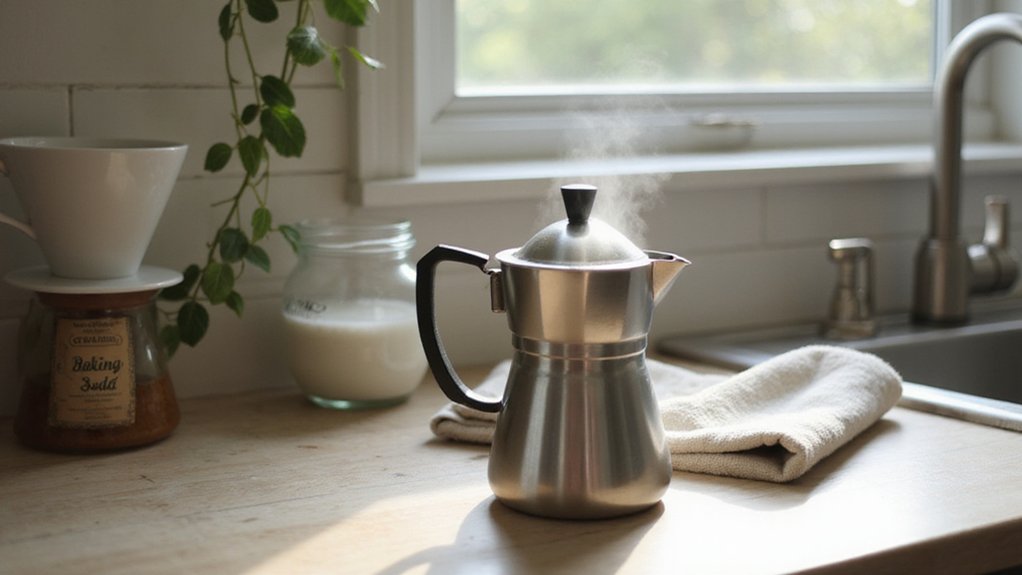
Keeping your stainless steel coffee carafe clean can be a challenge, especially when stains and odors cling to its surface.
Luckily, simple daily routines and a few household ingredients can help you maintain its shine and freshness.
In this guide, you’ll learn effective methods to remove stubborn stains, tackle oily residues, and keep your carafe looking and smelling like new.
Keep reading for straightforward tips to preserve your coffee companion’s sparkle.
Use White Vinegar to Remove Oily Buildup
To remove oily buildup inside your stainless steel coffee carafe, use a mixture of white vinegar and warm water in a 50/50 ratio. Pour the solution into the carafe and let it soak for 15 to 30 minutes to allow the vinegar’s acidity to break down the trapped oils. The warmth of the water helps loosen deposits faster. After soaking, use a soft sponge or bottle brush to gently scrub away the loosened film, taking care to avoid scratching the surface and working into corners thoroughly. For lids with complex crevices, a simple cleaning routine using a bottle brush can effectively dislodge debris. Rinse the carafe at least twice with warm water to remove any leftover residue. Finish with a gentle soap wash and dry completely to prevent odors from lingering. For best results, repeat this process every six months just as you would for your refrigerator’s ice maker water line to prevent mineral buildup and bacteria growth. To stop buildup from returning, using household products that work like a mixture of baking soda and water for a weekly rinse can help prevent oil and stain accumulation. Regularly repeating this process keeps your carafe clean, free of oily buildup, and smelling fresh.
Try Baking Soda for Stubborn Coffee Stains
To tackle stubborn coffee stains inside your carafe, a baking soda paste can be highly effective. Mix three parts baking soda with one part water until you form a thick paste. Use a soft cloth or non-scratch pad to apply the paste directly onto the stained areas. Spread it evenly over the surface, letting the mild abrasiveness lift residue without scratching the stainless steel. Unlike a glass carafe, stainless steel is more resistant to thermal shock, making it safe for this scrubbing method.
For more serious stains, fill the carafe with warm water and add one cup of baking soda. Let it soak for 15 to 30 minutes, or up to 45 minutes if the stains are particularly stubborn. After soaking, gently scrub the interior with a dish brush or soft sponge, using circular motions. Focus on the walls and bottom, as repeated light scrubbing works better than heavy pressure. Empty the solution, rinse thoroughly with warm water, and dry completely with a soft towel to prevent new spotting. Repeat the process if stains remain. For machines that handle frequent heavy use, commercial-grade cleaning methods can help maintain performance and longevity. Similarly, neglecting this buildup can lead to reduced efficiency and potential bacterial growth over time.
The Daily Routine That Keeps Your Carafe Spotless
Keeping your carafe spotless after each brew is straightforward if you follow a consistent routine. Begin by emptying it immediately after pouring—don’t let the coffee sit, as this can cause stains and odors that hide the true flavor of your beans. Rinse the interior with hot water right away, and make sure to swiftly flush out the lid, spout, and handle crevices where residue tends to hide. Pay special attention to narrow angles during rinsing to prevent buildup in those tight spots. For an equally pristine ice maker, consider nugget ice models that resist mineral deposits and keep drinks perfectly chilled. Understanding the Red Solo Cup capacity can help when measuring water for rinsing or portioning cleaning solutions. A 16-ounce measure holds 2 cups of water, making it easy to gauge rinsing amounts.
Next, wash the carafe using mild soap and warm water with a soft sponge. Scrub gently yet thoroughly, focusing on the bottom and sidewalls to remove any remaining coffee residues. Rinse completely to eliminate soap traces. Dry the carafe upside down, lid off, allowing moisture to escape and prevent any water spots. Wipe down the exterior to keep it looking fresh and free of smudges. Store the carafe dry and with the lid off to prevent odors and stains from returning. Performing this routine daily ensures you’ll never face stubborn buildup or lingering smells.
Tools That Won’t Scratch Your Stainless Steel Carafe
The best tools for cleaning your stainless steel carafe are those that won’t scratch its finish. Start with a soft sponge or dish rag soaked in warm, soapy water for routine cleaning. These gentler tools effectively remove residue without causing micro-scratches. For fingerprints or a light film, a microfiber cloth works well because it lifts grime gently and dries quickly, helping to reduce water spots. When more scrubbing power is needed, opt for a nylon scrubbing pad; apply it with light pressure to prevent dulling the surface. For stubborn, stuck-on residue, soak the area first and then use a plastic or wooden utensil to lift deposits. Steer clear of steel wool, metal brushes, and abrasive powders, as these can scratch and damage the finish. Pair these tools with eco-friendly cleaning methods like gentle wiping to maintain your carafe’s flawless look over time. While cleaning, avoid using the kettle itself for anything other than water to prevent buildup that might scratch the interior if you were to boil coffee residue. Best thermal carafe models often feature narrow openings that require extra care, so using these non-abrasive tools is especially critical to avoid damaging the interior. For pour-over enthusiasts, a gooseneck kettle is the ideal companion for precise, controlled pouring when brewing directly into your carafe. For optimal visual appeal, consider using a countertop ice maker to produce clear ice cubes that won’t cloud your coffee carafe’s exterior when adding ice for quick cooling.
Simple Habits to Prevent Stains Long Term
To prevent long-term stains on your coffee carafe, make a habit of rinsing it immediately after brewing. Fresh coffee residue can be wiped away easily, but once it dries, it bonds strongly to the steel surface. To keep the carafe clean, wash it promptly with mild soap and dry it thoroughly with a soft towel. Air-drying upside down helps prevent trapped moisture, which can cause stubborn water spots. For best results, you can also use a mild vinegar solution to periodically dissolve mineral deposits. Regularly wipe the lid and rim, as oils tend to collect around these edges and form brown rings. Avoid leaving the carafe on a warmer or heat source, since heat speeds up staining. For those who also serve juice, consider how juice dispensers maintain their stainless steel surfaces to further prevent residue buildup. Store it in a dry, empty state to prevent mineral buildup and rust. Maintaining these routines—quick rinses and proper drying—will help your carafe stay stain-free over time. Consistency is more effective than deep cleaning on an occasional basis. For precise measuring of cleaning solutions, remember that a standard bar spoon holds about 5 milliliters of liquid.