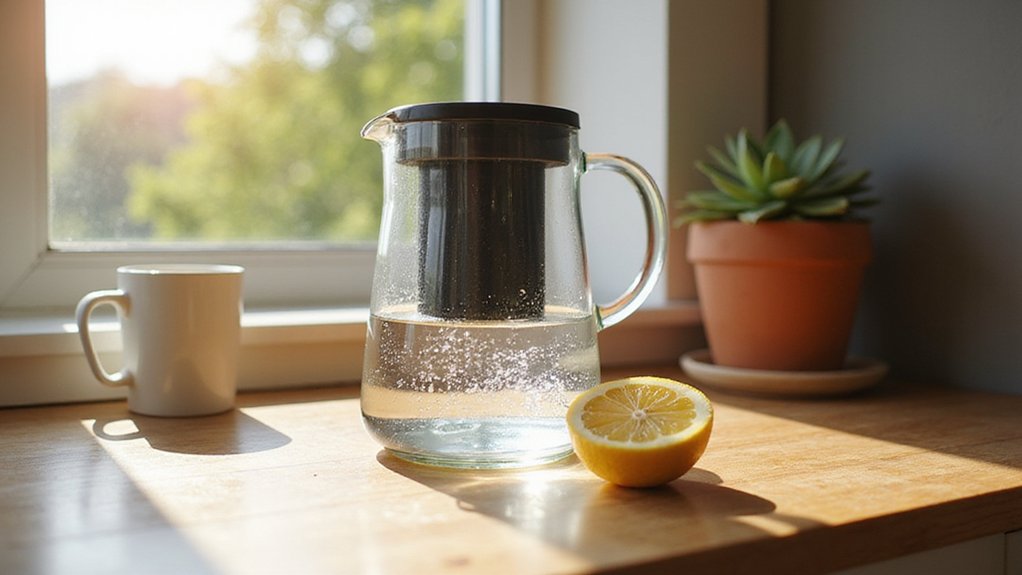
You might wonder if Brita offers a glass pitcher option. The answer is yes—the Brita Glass Jug is made from durable borosilicate glass with a BPA-free plastic lid.
It uses the same four-stage filtration process to improve water quality.
Keep reading to find out why this sleek pitcher isn’t available on American shelves.
Does Brita Actually Make a Glass Pitcher?
Yes, Brita does make a glass pitcher, called the Brita Glass Jug or glass water filter jug. This product is listed on official Brita websites in multiple regions, confirming it’s an active offering and not just a concept. Brita’s reputation for innovation and quality supports this premium glass option, providing a sustainable upgrade from their standard plastic pitchers. Customer reviews often praise its durability and ability to improve taste, highlighting its value. To keep your Brita glass pitcher in top condition, you should periodically clean it with mild soap and warm water, just as you would maintain any ice maker to prevent mineral buildup and odors. Keep in mind, regional availability varies: in Europe and Asia-Pacific, the glass jug is widely available, but in the United States, Brita primarily offers plastic models like the Denali. If you’re in the U.S., you may need to look at specialty stores or consider imports to get one. Meanwhile, for those seeking a crunchy refreshment, top nugget ice makers deliver a perfect chill similar to premium filtered water. For a more artisanal touch, you could even use filtered water from this glass pitcher to smoke cocktail ingredients, elevating your home mixology.
Brita Glass Jug: Materials, Build, and Filtration
Brita’s glass jug is constructed from borosilicate glass, which provides exceptional durability, heat resistance, and scratch-proof qualities. This material remains odor- and taste-neutral, ensuring your water never absorbs unwanted flavors. To maintain its clarity, hand-wash the glass vessel and avoid abrasive scrubbers. The lid and funnel are made from bio-based or BPA-free plastic, offering a safer, environmentally friendly alternative to all-glass assemblies. For those who prefer a different material, BPA-free plastic cups with lids are also a popular option for safe drinking.
For environmental impact, Brita sources 60% of its recycled glass from production surplus, reducing reliance on virgin materials. The filtration system features a four-stage process using activated coconut carbon and ion-exchange resin. It effectively reduces chlorine taste, limescale, copper, and other impurities, but it does not sterilize water. This means your water will taste better and be cleaner, without the risk of plastic body discoloration. Remember to replace the filter according to the recommended schedule to ensure optimal performance. For those seeking a different kitchen appliance, best countertop ice makers offer a separate way to improve your drinking experience. To keep the glass pitcher performing well, regularly clean the internal components using a mild vinegar solution to prevent mineral buildup, a method recommended for maintaining countertop ice makers.
Brita Glass Jug Capacity, Dimensions, and Filter Life
Filter life varies based on the cartridge type. The Brita Elite filter lasts for 454 liters, which is roughly six months of regular use. In contrast, the Original filter is designed for 40 gallons or about two months. Some Brita jugs come equipped with a Smart Light that alerts you to replace the filter every four weeks or after 150 liters. To ensure optimal performance, always follow the recommended replacement interval suited to your specific filter type. For extended trips, you can apply ice cream preservation methods by pre-chilling the cooler with ice packs to maintain a stable temperature for the jug. When hosting a gathering where the jug will be placed on a buffet table, consider punch bowl setup tips like using a chilled base to keep the water consistently cool without diluting it. Unlike many coffee brewers that rely on a thermal carafe for heat retention, Brita glass pitchers prioritize filtration efficiency and require no heating element to function.
How Does the Brita Glass Pitcher Compare to Plastic Models?
Glass pitchers are generally heavier and more fragile than plastic models, making them easier to break if dropped. Plastic pitchers are lighter, often more affordable, and easier to carry around, which can be a big plus if you need portability. However, over time, plastic can warp, absorb odors, and develop cloudy spots, especially with regular use. From an environmental perspective, glass is the greener choice because it doesn’t shed microplastics and is made from sustainable materials. Plastic pitchers, on the other hand, are petroleum-based and contribute to plastic waste. If you prioritize a cleaner taste and eco-friendliness, glass is the better option. But if budget and convenience are your main concerns, plastic might suit you better. Similar to addressing an ice maker issue, routine maintenance of water lines prevents frustrating clogs from scale buildup. Just as cold brew concentrate offers a richer, more concentrated flavor that you can dilute to your preference, a glass pitcher provides a purer, more versatile water experience that doesn’t retain lingering tastes from previous contents. For those seeking the best results, learning proper filtering techniques ensures a smooth, sediment-free final product.
Where Can You Buy a Brita Glass Pitcher?
You can purchase a Brita glass pitcher at Target and Amazon, both of which frequently list active options. Checking Brita’s official store is also a smart move to confirm authenticity and find the latest models directly from the brand. Amazon offers a wide selection from various sellers, but prices can vary significantly depending on the region and seller. For discontinued or vintage models, eBay is a good resource, though stock may be inconsistent. International retailers like Amazon UK or David Jones often carry glass pitchers, particularly the 2.5-liter size, that might not be available in U.S. stores. Always verify the product listing to ensure it’s an official Brita pitcher, as some results may show Brita-compatible options rather than authentic products. For those seeking a high-quality alternative to plastic, many users also compare these pitchers against top tumbler with straw picks for everyday hydration. Each glass jug includes a Maxtra Pro all-in-1 performance cartridge for effective filtration. For similar stylish drink protection, some buyers prefer wooden coasters over glass surfaces to prevent condensation rings.
Why Can’t You Buy a Brita Glass Pitcher in the U.S.?
Brita doesn’t sell a glass pitcher in the U.S. because of business strategy rather than legal restrictions. Clorox controls Brita’s U.S. rights and has tailored their product offerings for the American market around plastic pitchers. These plastic models are priced to be affordable for mass-market consumers, which would be difficult to achieve with glass due to higher manufacturing, shipping, and design costs. For shoppers seeking a durable glass option, top water coolers with ice makers often offer better quality and value for countertop hydration. Many of those cooler options, however, come in neutral colors, whereas buyers wanting a stylish look might consider a pink cooler with wheels for portable use instead. Market segmentation plays a key role: Brita’s U.S. branding emphasizes plastic safety and affordability, making a glass version unnecessary from a business perspective. Creating a glass pitcher would require a different manufacturing process, redesign, and packaging, which may not align with their current distribution and marketing approach. Since there’s no legal barrier preventing the sale of glass pitchers, the primary reason they’re unavailable in the U.S. is that the business model doesn’t support it economically.