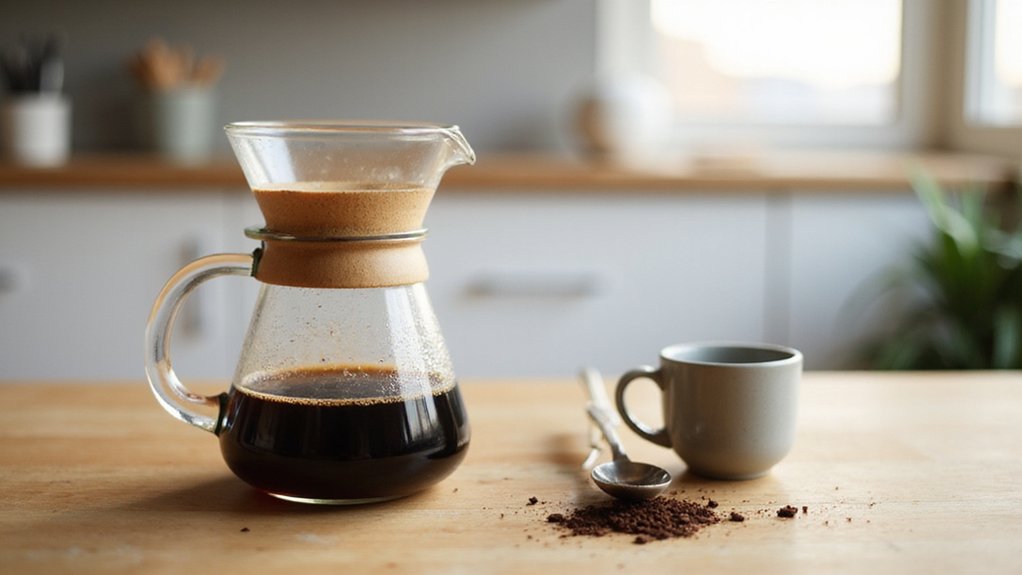
Ever wondered what a carafe of coffee really is? It’s more than just a fancy container — it’s what keeps your brew hot and ready to pour.
Whether glass, stainless steel, or thermal, the right carafe can make a big difference in how you enjoy your coffee.
Keep reading to find out which type suits your routine best.
What Is a Carafe of Coffee?
A coffee carafe is a container designed to hold, serve, and keep your brewed coffee hot. It is most often the removable pot on a drip coffee maker and serves as the direct collection point after brewing. This ensures brewing compatibility with your machine and allows for easy transfer of freshly made coffee. Carafes come in various materials, including glass with a warming plate or double-wall stainless steel for better insulation. Insulated versions maintain temperature and aroma for hours thanks to a tight-sealing lid that prevents heat loss. For those seeking the same level of dedication to quality in their cold drinks, look for similarly insulated options from nugget ice makers that prioritize performance and value. Equipped with a built-in handle and spout, a carafe lets you pour coffee confidently without splashing. Whether you’re serving at home or during meetings, it keeps your coffee fresh and warm, protecting its flavor from the moment it finishes dripping. The carafe is your go-to vessel for batch brewing and effortless serving. If your ice maker is not working, a similar troubleshooting approach to common causes and step-by-step fixes can often resolve the problem without needing immediate professional help. For tea lovers, a carafe with a gooseneck spout offers the same precision pouring control found in top-rated electric kettles.
Carafe vs. Pitcher: What’s the Difference?
A carafe is a vessel designed to keep beverages hot and deliver a steady, deliberate pour, making it ideal for serving coffee. Unlike pitchers, which are wider and shorter, a typical carafe is tall and slender, often with a narrow spout that helps control the flow of liquid. Carafes are usually made of glass or thermal materials to maintain the temperature of the brew, adding an elegant touch to your table setting.
Pitchers, on the other hand, are built for utility and casual use. They tend to be broader, shorter, and easier to handle, with a large handle and a wide spout that facilitates quick pouring. Pitchers are perfect for serving cold drinks like water, iced tea, or juice in high-volume situations where speed and practicality matter more than finesse.
The 4 Types of Coffee Carafes You’ll See Most Often
There are four main types of coffee carafes, each designed for different needs and brewing styles. Glass carafes are the most common and allow you to see the coffee inside, making it easy to monitor during brewing. They work best with warming plates that keep the coffee hot without affecting the flavor. For parties, you might also consider custom cups that can be personalized to match your event’s theme. Thermal carafes use double-wall insulation to preserve heat without requiring a heating element, making them ideal for keeping coffee hot over a longer period without reheating. For example, a thermal carafe with double-walled vacuum insulation can keep beverages hot up to 12 hours or cold up to 24 hours. Knowing the capacity helps you plan, such as understanding that 16 ounces equals 2 cups for precise serving. Among the top-reviewed models, thermal carafes often outperform others in heat retention and overall brew quality. Stainless steel carafes are known for their durability and often come with drip-resistant spouts, making them suitable for daily use and frequent handling. Pour-over carafes are designed to integrate with manual drippers, offering precise control over brewing while presenting a sleek, elegant way to serve fresh coffee. Each type emphasizes different benefits, so pick the one that aligns with your brewing method and serving needs.
Which Carafe Material Is Best for You?
Glass is best if you prioritize visual appeal and flavor purity. Its clear body allows you to see the coffee’s color and sediment, making it easy to monitor the brew. Being non-reactive, glass does not alter the taste, which is ideal if you prefer a pure coffee flavor. However, glass is fragile; it can break easily and cools quickly, often forcing you to keep it on a hot plate that may scorch your coffee. Notably, Brita does not make a glass pitcher for coffee, focusing instead on water filtration pitchers made from other materials. For buyers seeking travel-friendly options, stainless steel tumblers are widely praised for combining rugged durability with superior heat retention. For those who prefer glass, using a Keurig descaling solution regularly can prevent mineral buildup that dulls the flavor of your brew.
Stainless steel carafes offer durability and long-lasting heat retention. Their double-wall vacuum insulation keeps coffee hot for hours without the risk of scorching, making them perfect for busy mornings or travel. Steel’s rugged construction better withstands drops compared to glass, offering you peace of mind in active environments. Although they lack sightlines to view the brew, the toughness and heat retention can outweigh visual appeal for many users.
Consider how your routine aligns with these characteristics. If looks and flavor are your priority, glass is a good pick. If you need durability and consistent warmth, stainless steel provides a reliable alternative.
What Size Should You Actually Buy?
Choose a carafe size that matches your typical brewing capacity. Start with the standard 8-ounce serving as your baseline—divide the total ounces of the carafe by eight to estimate how many cups you’ll get. Single drinkers usually need just 1 to 4 cups per brew, while couples often prefer an 8-cup (40–64 ounces) size. Small families might opt for a 10-cup (50–60 ounces) model, and larger households generally require 12 cups or more (60–96 ounces). Similarly, just as ice pack performance varies based on factors like insulation and ambient temperature, your carafe choice should account for how long you need your coffee to stay hot. Always verify the manufacturer’s ounces rather than relying solely on the cup count because the definition of a cup varies from 5 to 8 ounces. For instance, knowing that 16 oz is 4 cups only works if your cup equals 4 ounces, not the more common 8-ounce serving. If you use oversized mugs, consider choosing a larger capacity carafe. For personal use, a compact size suits your needs; for entertaining guests or family gatherings, go for a 64-ounce or larger model. Focus on how many people typically drink at once instead of daily totals to avoid waste and the hassle of rebrewing.
Heat Retention, Cleaning, and Durability: How to Choose
Heat retention primarily hinges on the insulation type used. True vacuum insulation outperforms air-filled double walls by keeping coffee above 140°F for hours. To maximize heat efficiency, preheat your carafe before pouring in hot liquid. Durability depends on the material: opt for stainless steel if you’re prone to drops, as it resists dents and scratches. Glass-lined carafes, while better at resisting stains and odors, are more fragile and prone to cracking if mishandled.
Cleaning involves warm, soapy water and a bottle brush to remove residue effectively. For stubborn stains, sprinkle baking soda inside and scrub gently. Descale regularly with white vinegar to prevent mineral buildup that can affect heat retention. Always air-dry your carafe with the lid off to avoid mold growth and to allow moisture to escape. Avoid dishwasher heat cycles, as they can weaken gaskets and damage the vacuum seal. Hand-washing with care extends your carafe’s lifespan by maintaining its insulation and structural integrity.